


Today, we don’t challenge you to write all of a long, dramatic, narrative poem, but we invite you to try your hand at writing a poem that could be a section or piece of one. Include rhyme, include unlikely and dramatic scenes (maybe a poem about a bank robbery! Or an avalanche! Or Roman gladiators! Or an enormous ball held by mermaids, where there is an undercurrent (hee) of palace intrigue!) Basically, a poem with the plot of an opera (evil twins! Egyptian tombs! Star-crossed lovers! Tigers for no apparent reason!)
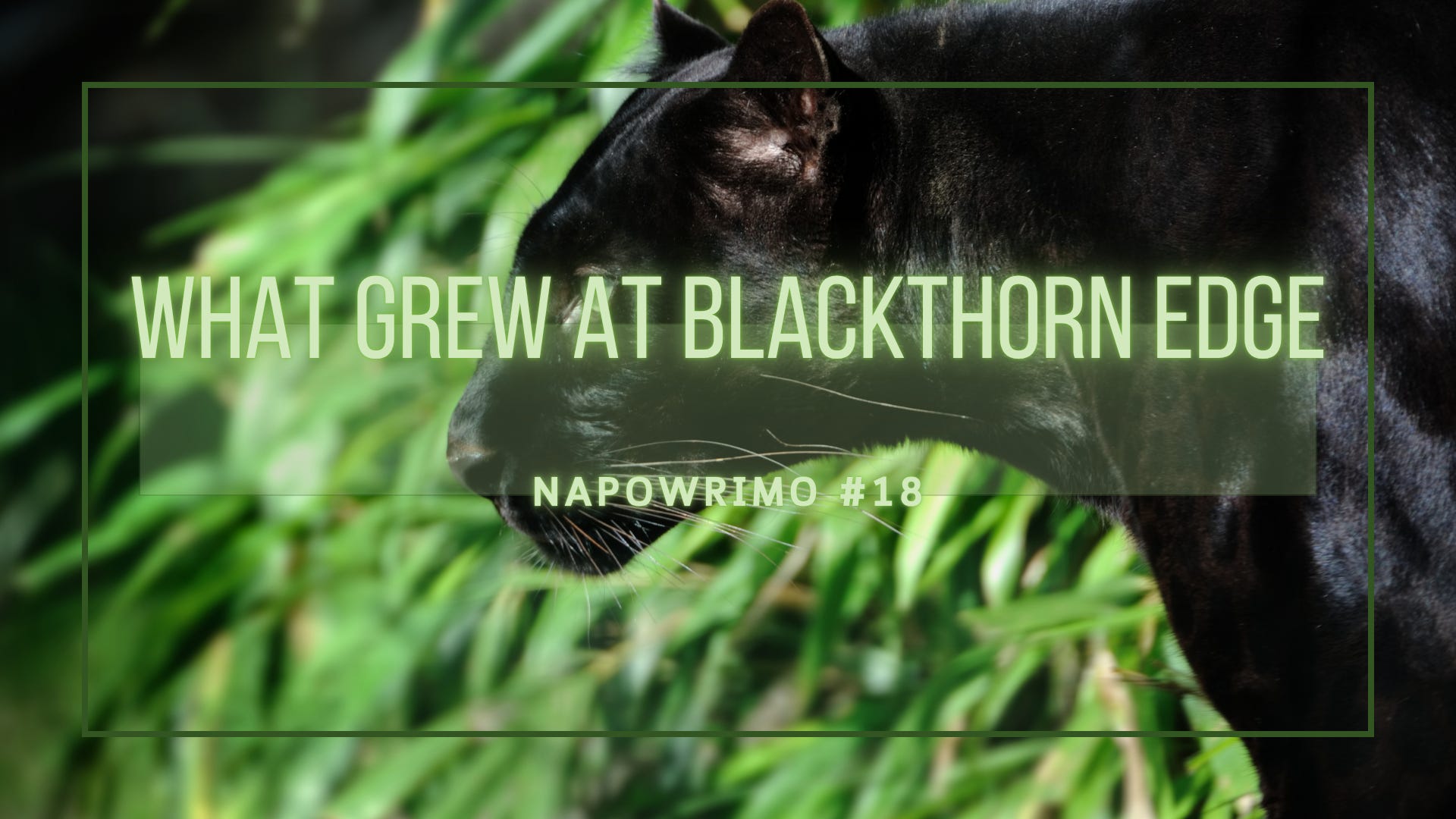
I chose to write a narrative poem about a garden witch with a surprising familiar.
I. They called him a grower of things; low praise, the kind men use when they mean to diminish. He kept a garden at the edge of the wood where the field ran thin and the pine threw shade, and something about the place stayed fed: rye tall through the August drought, a dead graft blooming before the cold had lifted, bees arriving weeks before anyone’s clover opened. Nobody asked how. That was the first mistake. II. Three men rode out on a morning in May with a warrant half-forged and a plan for the day. They’d cleared out a healer last month in the hills, they’d run off a woman whose land paid their bills. Here was a grower alone in his rows— here was a warrant, and nobody knows a thing about warrants once fear takes the throat. They rode down the valley in confident note. They called at the fence in the hour before noon. He came out with a spade. They expected him soon to pale, to recede, to surrender what’s his; but his eyes were the color of old iron, and his left hand dropped low, pressed into the dirt, and none of them noticed. That was what hurt. III. He planted something while they read him the warrant. Small gesture. They didn’t see. The bailiff laughed. The cousin stepped forward. The dog snapped its lead and lunged for his throat— and the garden moved. Not wind-in-the-rye moved. Not that. The way a garden moves when it decides to. Vine to the ankle. Root across the boot. Rye came down like a wall, and through it came something black and enormous that had been lying in the furrows all morning, so still it had looked like a shadow of nothing. The panther set one paw on the bailiff’s chest and breathed. IV. The warrant lifted into the field. The men ran after it, more or less, and the cousin left a boot. He stood in the wreck of his rows, the great cat leaning into his hip. He pressed his fingers into black fur. You’ve made a mess of the rye, he said. The panther said nothing (in the way of panthers) and licked his wrist once, hard. He knelt, both palms flat to the ground, and by evening the rows stood straight again.

Prompt Inspiration
Via NaPoWriMo
When I was growing up, there was a book of poems in my house (I believe it was The Best Loved Poems of the American People) that was heavy on long, maudlin, narrative poems with lots and lots of rhyme – the sort of verse that used to be parodied on Bulwinkle’s Corner. As the twentieth century rolled in, poems like this were relegated to the status of stuff-schoolkids-were-forced-to-memorize, and they plummeted even further into our cultural memory-hole as learning poems by heart fell out of educational currency. But while some work in this style is extremely cringeworthy (I’m looking at you, “Bingen on the Rhine”), they can also be very fun to read. Take, for example, Sadakichi Hartmann’s “The Pirate,” or Alfred Noyes’s “The Highwayman.” The action is dramatic, there’s lots of emotions, and the imagery is striking.

Thanks very much for reading, subscribing, and sharing the stories, poetry, and essays in this space. If you like a story, poem, or essay, please click on the heart. Also if you are so moved, please leave a comment.
