

In near-dark quiet,
she sits still,
breath slow,
thoughts deep.

Three—
a shape in mind,
a pulse,
a rhythm.

Warnings float past,
like leaves
on a gentle stream.

Yet power hums
in three’s space,
a steady beat,
a silent call.

Three Graces,
holy echoes,
father, son, spirit,
an invocation.

Faith holding
harmony’s hand,
touching wisdom’s edge.

Numbers dance
in shadowed light,
patterns forming,
shapes becoming.

Three words hold
a soft weight,
understanding’s door,
open wide.

No need for light:
just this moment,
this number,
this calm.

Her eyes close,
seeing beyond sight,
where thoughts
gather and part.

Patterns throb,
not random,
mindful, careful,
like breath’s flow.

Three steps forward,
three steps back,
a rhythm
older than time.

She feels it,
not just counts,
the space between,
the silent beat.

Wisdom doesn’t shout,
it hums low,
in places
words can’t reach.

Harmony
is balance found
in thirds—
a quiet truth.

Understanding blooms,
slow and sure,
like dawn
touching night.

Author’s Note
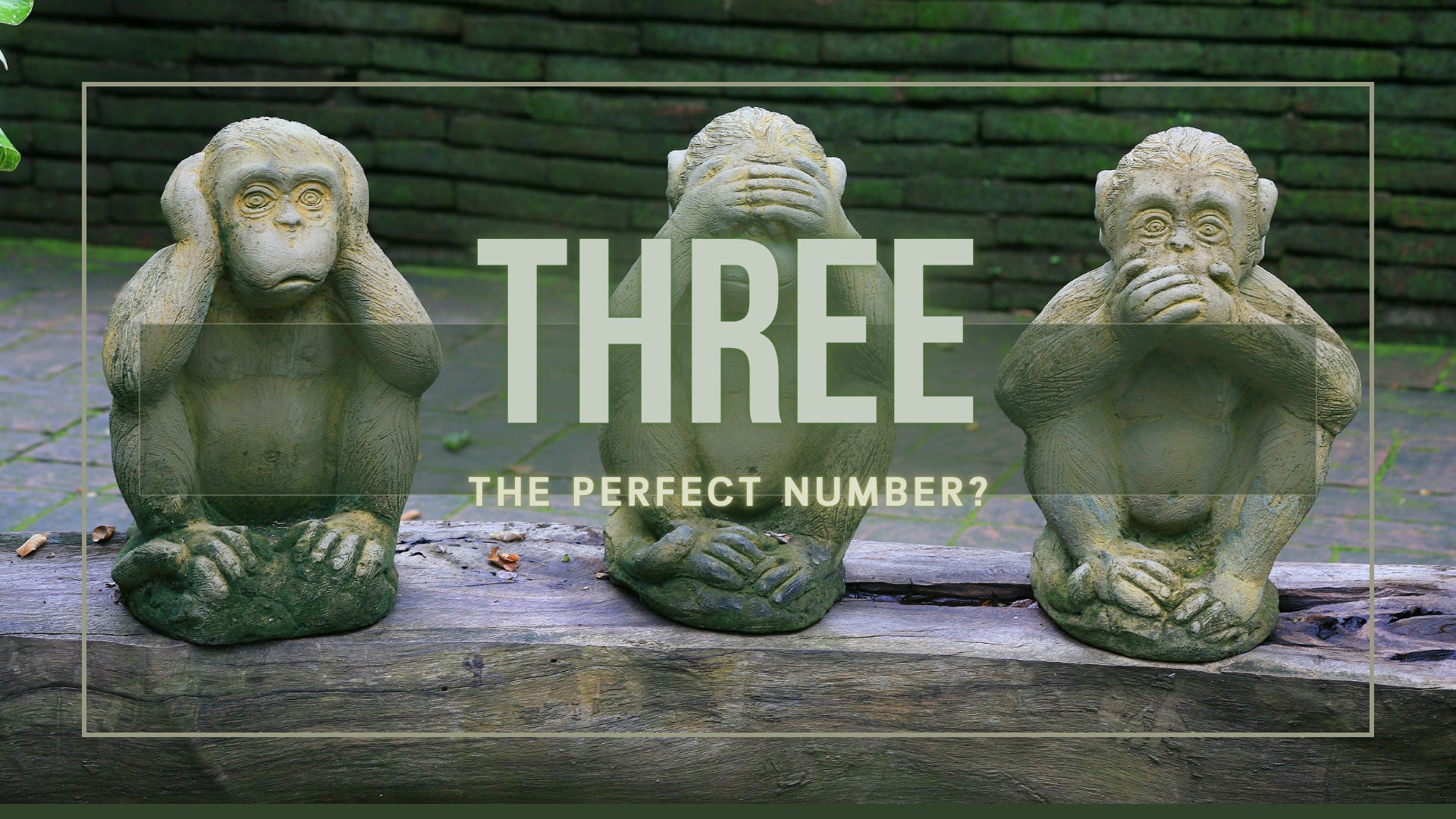
This poem grew from a fascination with the number three and how it shows up in so many different ways across cultures and ideas. For example, the photo of the three monkeys on this page relates to a Japanese proverb known as the sanzaru. One monkey, Mizaru, sees no evil (covers his eyes), another monkey, Kikazaru, hears no evil (covers his ears), and the third monkey, Iwazaru, speaks no evil (covers his mouth).
It’s interesting to me how something as simple as a number can carry both caution and reverence, seen as powerful and perfect, yet also surrounded by warnings.
I referenced the Three Graces and the Holy Trinity in the poem because they reminded me how deeply numbers can connect to stories and beliefs, offering meaning beyond just counting. Pythagoras’s view of three as a symbol of harmony, wisdom, and understanding felt like a beautiful way to think about how patterns emerge—not just in math, but in life.
In the end, my poem tries to capture a quiet moment of reflection, where those ideas settle in and become something felt, rather than just thought about. It’s a small exploration of how numbers can touch something deeper inside us.
Upcoming…
A poem on aging:
Age of Lichens, 17 January 2026

Thanks very much for reading, subscribing, and sharing the stories, poetry, and essays in this space. If you like a story, poem, or essay, please click on the heart. Also if you are so moved, please leave a comment.

Lovely. THREE CHEERS for you , Caro !
I like to read your poems aloud. This one felt like a musical staccato beat. short, crisp, each word meaningful and important. But with a soft graceful ending. Loved it. Thank you.