

Today, pick a flower or two (or a whole bouquet, if you like) from this online edition of Kate Greenaway’s Language of Flowers. Now, write your own poem in which you muse on your selections’ names and meanings. If you’re so inclined, you could even do some outside research into your flowers, and incorporate facts that you learn into your work.
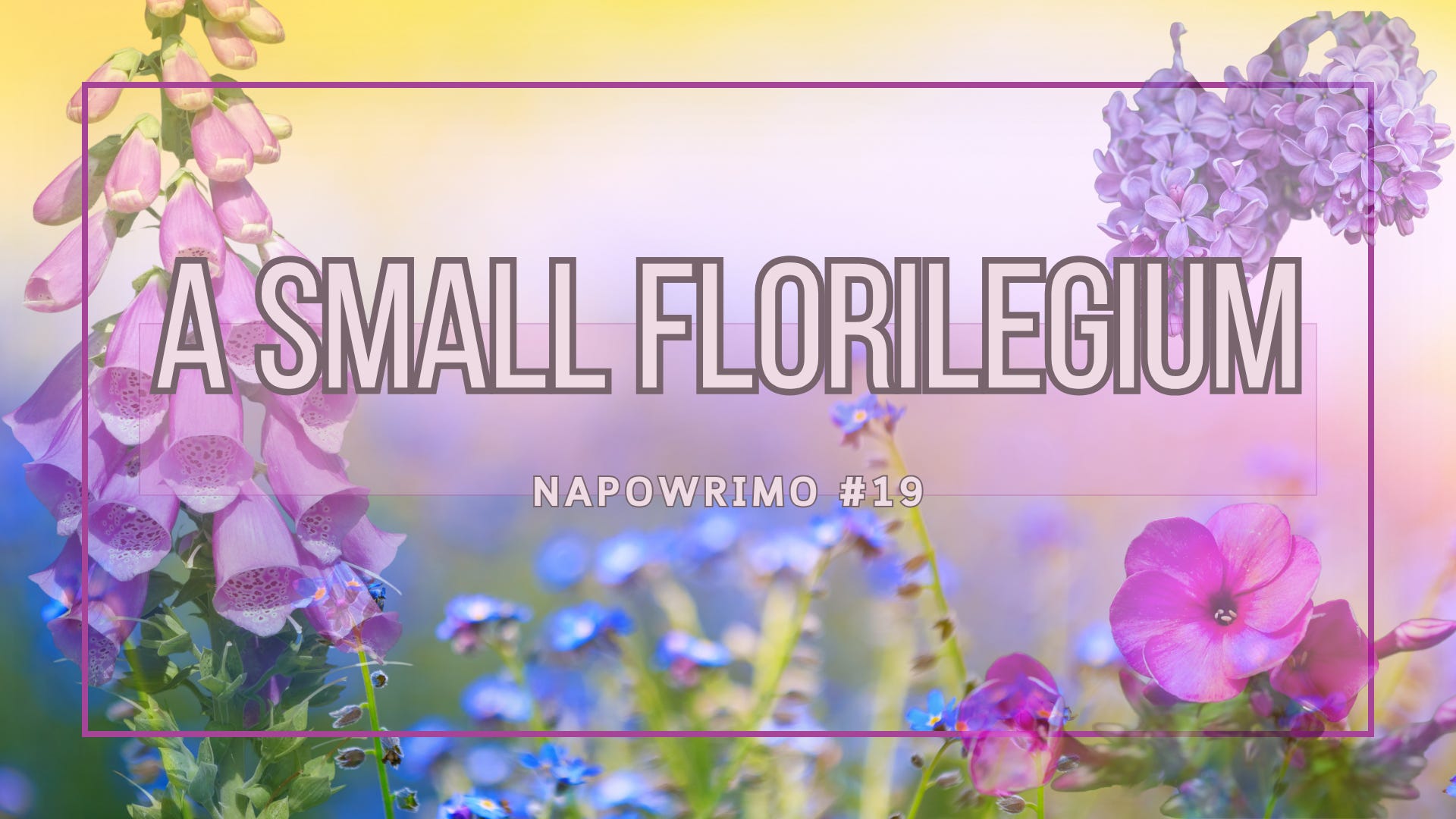
Forget Me Not Myosotis—mouse-ear, Greeks said, for the shape of a leaf. A knight drowned gathering them along a riverbank, his last words tossed to a woman on shore. True love. Such a small and common request. Foxglove Digitalis. Count the flowers up a spike: forty, sixty, a whole staircase of bells. Physicians boil the leaves into heart medicine. The dose that heals and the dose that kills, almost the same number of drops. Phlox Phlox is Greek for flame. These small pink stars have no opinion, ask nothing of the soil but drainage, spread without argument through a garden— unanimity, the kind that needs no discussion. Purple Lilac Pan loved Syrinx. She became a reed. He cut her into pipes and called it music. Every time you smell a lilac in April, that’s the first emotion of love— before you know what it will cost you.

Prompt Inspiration
Via NaPoWriMo
The word florilegium refers to a book of botanical illustrations of decorative plants and also a collection of excerpts from other writings. In her poem, “Florilegium,” Canadian poet Sylvia Legris gathers together many five-lined stanzas that describe flowers but also play with the sounds of their names, their medical (or poisonous) qualities, and historical aspects of herbalism.

Thanks very much for reading, subscribing, and sharing the stories, poetry, and essays in this space. If you like a story, poem, or essay, please click on the heart. Also if you are so moved, please leave a comment.
